
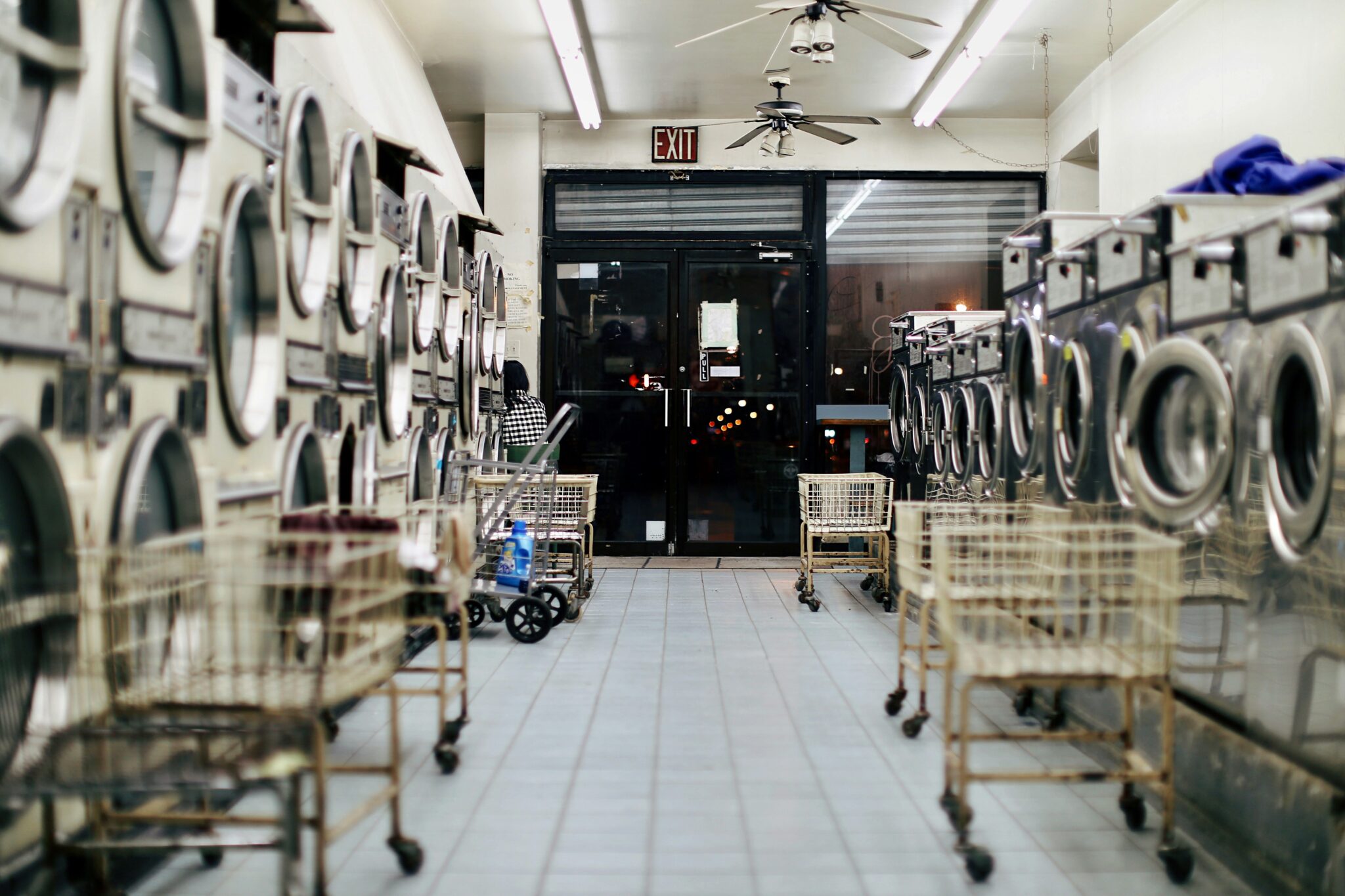

A laundrette can look like a simple business from the outside.
Customers arrive, load a machine, pay for a wash or dry and leave. There may be no appointments, no long sales process and no complicated stock management. Compared with some businesses, that can make a laundrette feel straightforward.
But when it comes to valuation, buyers look deeper.
They want to understand the machines, the lease, the running costs, the local customer base, the condition of the premises and whether the business is genuinely profitable without the current owner doing unpaid work in the background.
So, what is a laundrette business worth?
The honest answer is that it depends on the quality of the profit and the risk attached to it. A clean, well-located laundrette with modern machines, strong usage, controlled utility costs and a secure lease will usually attract more buyer confidence than one with tired equipment, unclear income records or a short lease.
The value is not just in the washers and dryers. It is in the cash flow those machines can keep producing.
Buyers start with profit, not turnover
A common mistake is to value a laundrette mainly on turnover.
Turnover matters, but it does not tell the full story. A laundrette can take good money through the machines and still produce weak profit if rent, energy, water, repairs and finance costs are too high.
Buyers are usually more interested in maintainable profit. In simple terms, they want to know what the business is likely to make after they take it over.
For a small owner-operated laundrette, buyers may look at adjusted net profit or seller’s discretionary earnings. For a larger or more structured business, they may look at EBITDA. Either way, the aim is the same. They want to understand the real earning power of the business.
That means reviewing:
- machine income
- wash, dry and fold income if offered
- service wash income
- commercial laundry income
- vending or detergent sales
- rent and property costs
- energy and water bills
- repairs and maintenance
- staffing costs
- card payment fees
- finance or leasing costs on machines
A buyer will not simply ask, “How busy is it?” They will ask, “How much of that income turns into profit?”
That is where valuation starts.
Ready to Sell Your Laundrette in the UK?
Get expert support with valuation, marketing, due diligence and negotiations so you can sell your laundrette quickly and for maximum value.
Start your selling journey →
A realistic valuation approach
Most laundrette businesses are valued by applying a multiple to maintainable earnings, then adjusting for risk, assets and deal structure.
There is no official table that says every UK laundrette is worth a fixed multiple. In practice, the multiple depends on the strength of the business.
A small, heavily owner-dependent laundrette with older machines and a short lease may sit towards the lower end. A well-run laundrette with reliable income, modern equipment, a strong location and limited owner involvement may attract stronger interest.
A practical way to think about it is:
- weaker or higher-risk businesses attract lower multiples
- stable businesses with clean records attract stronger multiples
- larger or more systemised laundrettes may appeal to a wider buyer pool
- freehold property, where included, should be assessed separately from the trading business
The important point is that buyers pay for confidence. If the profit is clear, the lease is secure and the machines are in good condition, the business is easier to value and easier to finance.
If the figures need a lot of explanation, the buyer will usually become more cautious.
The machines matter more than many owners realise
In a laundrette, the equipment is not just part of the business. It is the business engine.
Buyers will want to know the age, make, capacity and condition of the washing machines and dryers. They will also look at whether the machines are owned, leased or under finance.
A laundrette with older machines may still be profitable, but a buyer will ask what needs replacing and when. If several machines are likely to need replacement shortly after completion, that will affect the offer.
Machine condition also affects customer experience. If machines are often out of order, slow, inefficient or expensive to run, the business may be less attractive. Modern machines can help with energy use, reliability and payment options, all of which can support value.
A sensible seller should be ready with:
- an equipment list
- machine ages
- service records
- repair history
- details of owned, leased or financed equipment
- any warranties or maintenance contracts
- expected replacement needs
This does not mean every machine has to be brand new. Buyers understand that equipment has a life cycle. What they want is clarity.
Surprises around equipment usually create price pressure.
Utility costs can make or break the numbers
Laundrettes are energy and water-heavy businesses. That makes utility costs a major part of valuation.
A buyer will look closely at electricity, gas, water and wastewater charges. They will want to know whether the business has current contracts, whether rates are fixed or variable and whether costs have been passed on through pricing.
The Department for Energy Security and Net Zero publishes quarterly energy price statistics covering domestic and industrial consumers, including non-domestic gas and electricity prices. Its March 2026 release provides current context for business energy costs, which remain a key issue for energy-intensive operators.
Water is also important. Ofwat explains that eligible business customers in England, and some in Wales, can choose their supplier of retail water and wastewater services. This matters for laundrette owners because water and wastewater are not small background costs. They sit at the centre of the business model.
A laundrette may be busy, but if utility costs are poorly controlled, profit can be weaker than the turnover suggests.
Buyers will usually want to see at least the last 12 months of utility bills. They may also ask whether prices have been reviewed, whether meters are accurate and whether any usage issues have been identified.
Good utility management can support confidence. Unclear costs can reduce it.
Location is a major valuation driver
Location has a big impact on laundrette value.
A strong laundrette location usually has visible demand nearby. That may come from flats, rented housing, student accommodation, HMOs, older housing stock, limited in-home laundry space or a busy local high street.
The best locations are convenient. Customers need to get there easily, carry laundry in and out and feel safe using the premises. Parking, public transport, footfall, lighting and nearby shops can all make a difference.
A buyer will also look at competition. One laundrette in the right location can be very strong. Three similar laundrettes serving the same small catchment may be harder to defend.
Local demand matters more than broad national trends. A laundrette does not need to appeal to everyone. It needs to serve its immediate area well.
Buyers may ask:
- Who are the main customers?
- Are they local residents, students, landlords, tradespeople or businesses?
- How far do customers travel?
- Are there competing laundrettes nearby?
- Is there new housing or student accommodation in the area?
- Is the area changing in a way that helps or hurts demand?
A good location can protect income. A weak location can limit it, even when the business is well run.
The lease can change the valuation
For many laundrettes, the lease is one of the most important parts of the deal.
A buyer is unlikely to pay strongly for a business if the right to occupy the premises is uncertain. A short lease, high rent, difficult landlord or unclear renewal position can all reduce value.
A good lease gives the buyer time to earn back their investment and develop the business. A weak lease may make the opportunity feel risky.
Buyers will look at:
- remaining lease term
- renewal rights
- rent and rent review terms
- repairing obligations
- service charges
- permitted use
- assignment provisions
- landlord consent requirements
This is especially important for laundrettes because relocation is rarely simple. The site may need drainage, ventilation, power, gas, water capacity and a layout that suits heavy equipment. Moving to another shop unit is not the same as moving a small office.
If the lease is weak, buyers may still be interested, but the offer is likely to reflect that risk.
Cash, cards and proof of income
Historically, many laundrettes were cash-heavy. That can create valuation problems if income records are not clear.
Buyers want evidence. If takings are mainly cash and the records are weak, they may discount the business because they cannot verify the true performance.
Card and app-based payment systems can make income easier to track. They may also suit modern customer expectations. Cash can still have a place, but it needs to be recorded properly.
A buyer will usually compare machine income, banking records, card reports, utility usage and accounts. If the figures feel consistent, confidence improves. If they do not, more questions follow.
This is where good record keeping can increase saleability. It does not just make the accounts tidier. It helps defend value.
Owner involvement matters
Some laundrettes are close to hands-off. Others depend heavily on the owner.
This matters because buyers are valuing the future performance of the business. If the current owner cleans the premises daily, handles repairs, manages collections, deals with customers and does admin without taking a realistic wage, the profit may be overstated.
A buyer may adjust the numbers to include the cost of replacing that work.
That does not mean owner-operated laundrettes are unattractive. Many buyers like them because they can step into the role themselves. But the valuation needs to be realistic.
A laundrette with clear systems, reliable staff or contractors and low owner dependence is usually easier to sell. It may also appeal to a wider buyer pool.
Before selling, owners should be honest about how much time the business really takes.
Extra services can add value
A coin-operated laundrette does not have to rely only on self-service washing and drying.
Extra services can improve income and customer loyalty, especially when they are well managed. These might include:
- service washes
- dry cleaning agency work
- ironing
- wash, dry and fold
- duvet and bulky item cleaning
- commercial laundry for local businesses
- collection and delivery
However, extra services only add value if they add profit.
A buyer will want to know whether these services are properly priced, staffed and recorded. Service wash income may be useful, but if it relies entirely on the owner or creates low-margin labour, it may not add as much value as expected.
Commercial laundry can also be attractive, but buyers will look at the reliability of those customers. A few small repeat accounts may support income. A large contract that can leave at short notice may carry more risk.
Extra services are strongest when they are profitable, repeatable and not too dependent on one person.
What can reduce the value?
Laundrette valuations are often reduced by uncertainty.
Common issues include:
- old or unreliable machines
- unclear cash records
- high utility costs
- short lease term
- high rent
- weak local demand
- heavy owner dependence
- poor presentation
- limited opening hours
- repair backlogs
- low online visibility
- unpaid bills or arrears
- equipment finance that is not clearly explained
None of these issues automatically prevents a sale. But they can reduce buyer confidence.
A buyer may still see the opportunity, especially if they believe they can improve the business. But they will usually want the price to reflect the work and risk involved.
What can improve the value?
A laundrette is more attractive when it looks steady, clean and easy to take over.
Value can be supported by:
- clear financial records
- modern, efficient machines
- stable utility contracts
- a secure lease
- strong local demand
- good opening hours
- clean premises
- clear pricing
- reliable payment systems
- low owner dependence
- repeat commercial work
- scope for extra services
- good reviews and local reputation
A buyer does not need perfection. They need confidence.
If the business is profitable, the income is easy to verify and the main risks are understood, the sale conversation is much stronger.
Should freehold property be valued separately?
If the laundrette includes freehold property, it should usually be looked at separately from the trading business.
The business has a value based on profit. The property has a value based on its own market factors, such as location, condition, rental potential and alternative use.
Some buyers may want both. Others may only want the business and prefer to lease the premises. The right approach depends on the seller’s goals and the type of buyer.
A freehold can strengthen a sale, but it can also change the buyer pool. Some buyers can afford the business but not the property. Others may be mainly interested in the property and less interested in operating the laundrette.
It is important to be clear on this before going to market.
Preparing a laundrette for sale
If you are thinking about selling, preparation can make a real difference.
Start with the accounts. Make sure income, costs and profit are clear. If there are add-backs or one-off costs, gather evidence.
Then review the equipment. Prepare a machine list and be honest about condition. A buyer will find out during due diligence, so it is better to deal with the issue early.
Look at the lease. If the term is short or assignment may be difficult, take advice before going to market.
Review utilities. Gather recent bills and understand current contracts. If costs have increased, be ready to explain how prices have been adjusted.
Tidy the premises. Clean, well-presented laundrettes create more confidence than tired ones. Presentation will not replace profit, but it does affect first impressions.
Finally, look at owner involvement. If the business depends heavily on you, think about how duties could be documented or reduced before sale.
Tax should be considered early
If the sale produces a gain, tax planning may be relevant.
Business Asset Disposal Relief may reduce the Capital Gains Tax rate on qualifying disposals. GOV.UK states that the rate is 18% on qualifying gains for disposals from 6 April 2026, following 14% for disposals between 6 April 2025 and 5 April 2026. Eligibility depends on the details, so owners should take professional tax advice.
Tax should not be left until the final stages of negotiation. If the business structure, property ownership or shareholding needs review, that work should happen early.
So, what is a laundrette business worth?
A laundrette business is worth what a credible buyer is willing to pay for its maintainable profit, assets and future potential.
A strong laundrette is usually one with clear income, modern equipment, controlled utility costs, a secure lease and a good local customer base. A weaker laundrette may still sell, but buyers will price in the risk of repairs, lease issues, uncertain income or heavy owner involvement.
The main question is not just, “What did it take last year?”
It is:
“Can this business keep producing profit after completion?”
If the answer is clear, the valuation is easier to defend.
Final thoughts
Laundrettes can be attractive businesses for the right buyer. They often have repeat local demand, simple customer behaviour and clear opportunities to improve systems, pricing or additional services.
But they are not valued on simplicity alone.
Buyers will look carefully at the profit, machines, lease, utility costs and evidence behind the takings. The stronger those areas are, the more confidence a buyer is likely to have.
For owners, the best step is to prepare before going to market. Clean records, clear equipment information, a secure property position and realistic profit figures can all help protect value.
A laundrette does not need to be perfect to sell well. It needs to make sense.
Sources
Department for Energy Security and Net Zero, Quarterly Energy Prices: March 2026 (non-domestic energy price context): https://www.gov.uk/government/statistics/quarterly-energy-prices-march-2026
Department for Energy Security and Net Zero, Gas and electricity prices in the non-domestic sector (business energy price data): https://www.gov.uk/government/statistical-data-sets/gas-and-electricity-prices-in-the-non-domestic-sector
Ofwat, Business retail market (business water and wastewater retail market context): https://www.ofwat.gov.uk/regulated-companies/markets/business-retail-market/
Ofwat, Who is eligible? (business customers eligible to switch water retailer): https://www.ofwat.gov.uk/regulated-companies/markets/business-retail-market/who-is-eligible/GOV.UK, Business Asset Disposal Relief: Eligibility (tax rate on qualifying gains from 6 April 2026): https://www.gov.uk/business-asset-disposal-relief